Viking Burial Rituals, Ship Graves, and Afterlife Beliefs in Norse Mythology
Across early northern Scandinavia, burial practices were never uniform. Families and communities chose cremation, earth mounds, or ship graves depending on region, status, available resources, and shifting beliefs. These choices did not occur in isolation. They were shaped by trade, contact with other cultures, and evolving ideas about fate, ancestry, and the journey after death. When studied together, these mortuary traditions offer a vivid window into Viking burial rituals ship graves and afterlife beliefs, showing how the living negotiated memory, honor, and spiritual protection for the dead.
Why burial varied across the Norse world
Norse society was decentralized. Chieftains, farmers, and seafarers lived in landscapes that ranged from coastal fjords to inland valleys. Local custom, seasonal conditions, and the social standing of the deceased all influenced how a body was treated. A wealthy trader buried in a ship near the sea might receive very different treatment than a farmer placed under a simple stone cairn in a valley. Contact with the British Isles, the Baltic, and the continental mainland also introduced new ideas, materials, and styles. As beliefs and political networks changed, so too did the ways the dead were memorialized.
Cremation: fire as passage
Cremation was an ancient and enduring practice in many parts of Scandinavia. Fire could purify, transform, and release. In a cremation, the body was typically laid on a pyre with selected grave goods, then burned. The heat, smoke, and flame were powerful sensory markers of separation between the living and the dead. In some cases, the pyre was built on a ship or boat, combining two potent symbols: fire and seafaring. After burning, the remains might be collected, placed in a container, and buried in a pit, mound, or stone setting. Sometimes the cremation site itself became a marked place of memory, with postholes, stones, or hearths indicating ritual activity.
Cremation did not disappear when inhumation grew more common. In many regions, both practices existed side by side. This suggests that families weighed different concerns: purification through fire, the desire to place the dead in the earth, and the need to honor social expectations. The choice was rarely only about doctrine; it was also about practicality, local tradition, and family identity.
Mound burials: placing the dead within the landscape
Mound burials, or barrows, placed the deceased beneath a visible earthwork that marked the landscape for generations. A mound was more than a grave; it was a monument. It announced the presence of an ancestor, claimed territory, and reminded the community of lineage and obligation. Mounds could be simple or elaborate. Some contained a central chamber of wood or stone; others held the body in a pit lined with logs or stones. The size of the mound often reflected the status of the person buried within it.
Grave goods in mound burials could include weapons, tools, jewelry, and everyday items. These objects were not random. They could signal identity, role, and readiness for the tasks imagined in the afterlife. A warrior might be interred with a sword and shield, while a woman of high standing might be buried with keys, brooches, and fine beads. The presence of animals, especially horses and dogs, points to beliefs about companionship and transport in the world beyond death. Mounds also created a network of visible monuments across the landscape, linking families to places and to each other.
Ship graves: journeys, status, and cosmic travel
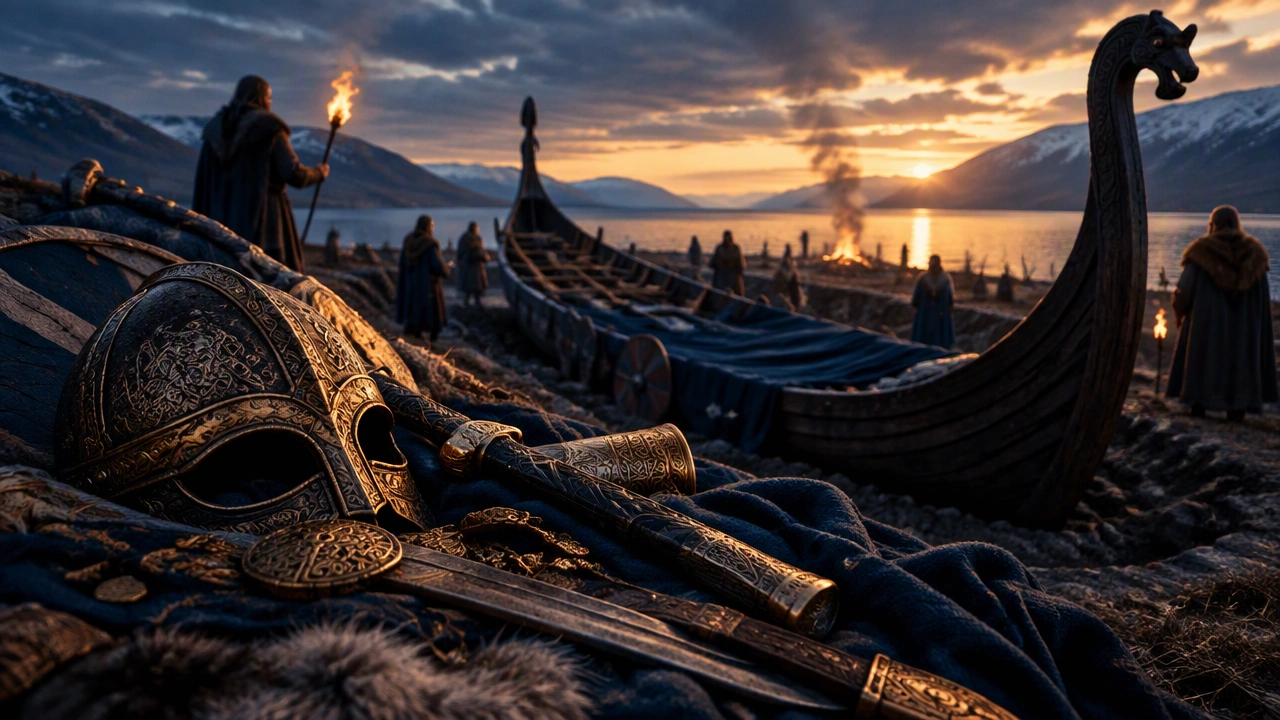
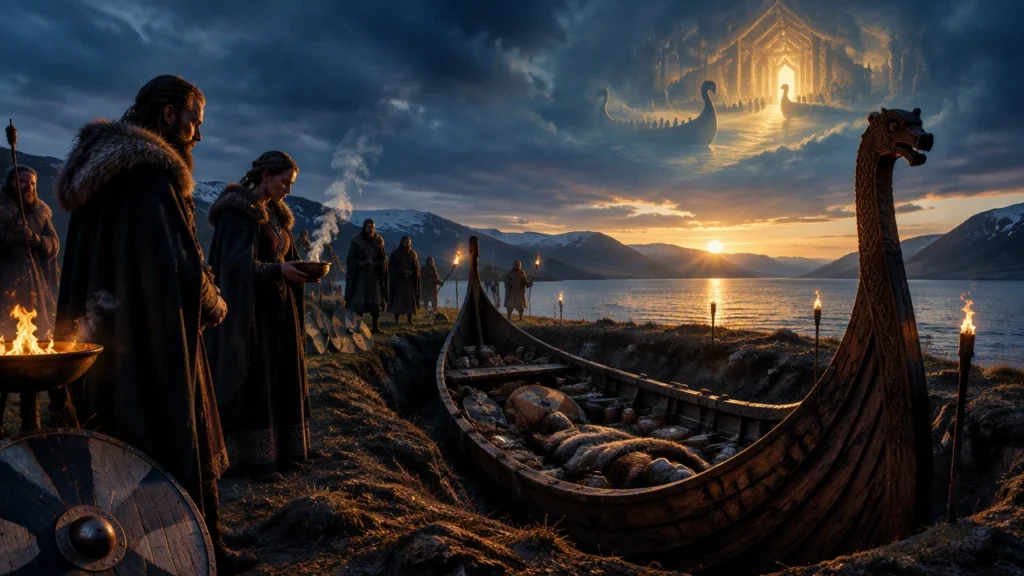
Ship burials are among the most iconic expressions of northern mortuary culture. A ship was a vessel of mobility, wealth, and skill. Placing the dead in or under a ship affirmed the deceased’s ability to travel, even beyond the limits of life. The most famous examples include large ship burials such as those at Oseberg and Gokstad in Norway, where well-preserved vessels held rich assemblages of grave goods. These burials combined craftsmanship, ritual, and display in ways that communicated elite status and deep belief in continued journeying.
Ship graves took many forms. In some, the ship was set in a large pit and covered with turf or earth, creating a mound over the hull. In others, the ship was burned on land, with the charred remains later buried. The size of the ship, the richness of the goods, and the presence of sacrificed animals or attendants all varied. Not every ship burial was a grand affair. Smaller boats were used for local elites, and simpler ship settings made of stones marked graves in many regions. The common thread was the idea that the ship could carry the soul, or at least symbolize the journey to another realm.
Grave goods as reflections of belief
Grave goods were practical, symbolic, and social. They helped the living express what they believed the dead needed, deserved, or had achieved. Common categories include
- Weapons and armor, signaling protection and status
- Tools and craft items, indicating work and self-sufficiency
- Jewelry and fine dress, marking identity, wealth, and gendered roles
- Household objects, such as keys, fire-starting gear, and kitchenware
- Animals, especially horses and dogs, as companions or transport
- Food and drink, offered to sustain the journey or to mark feasting
These choices were not fixed. Some burials are rich and complex; others are modest. The range suggests that families balanced spiritual aims with economic reality. A community might pool resources for a leading family, or a household might choose a meaningful object rather than a large set of goods. Over time, changing trade networks introduced new styles and materials, which affected what could be placed in a grave and how it was displayed.
Status, gender, and age in mortuary practice
Burials often reflected social position. Elite graves tended to be larger, richer, and more carefully constructed. They might use imported materials, rare metals, or exotic glass. Women’s graves could be very rich, especially in regions where women held key household roles and managed wealth in the form of jewelry and textiles. Men’s graves sometimes emphasized weapons, but this was not universal. Children’s burials, when marked, could include small personal items, toys, or amulets, expressing both grief and care.
The presence of animal remains is a strong indicator of beliefs about companionship and movement. Horses, in particular, suggest speed and travel. Dogs may represent loyalty and guardianship. In some cases, birds appear, perhaps signaling flight or the movement of the soul. The combination of human remains, animals, and objects creates a layered message about identity, duty, and hope.
Ritual sequence and community memory
Burial was rarely a single moment. It often involved several stages: washing and dressing the body, preparing the pyre or grave, arranging grave goods, feasting, and making offerings. These steps gave the community time to grieve, to honor the dead, and to reaffirm social ties. Memorial markers, repeated visits, and later burials near the same spot kept the memory of the ancestor alive. In some regions, reuse of burial sites over generations created complex layers of ritual activity. The landscape itself became a record of belief and identity.
Beliefs about the afterlife
The archaeological record does not come with written explanations, but the pattern of burials suggests several overlapping ideas. The dead were thought to need preparation for a journey or a new state of existence. Grave goods supplied tools, protection, and sustenance. Ship burials emphasized travel. Cremation emphasized transformation. Mounds emphasized presence in the land and connection to ancestors. Together, these practices point to a world in which death was not simply an end but a transition that required care, resources, and communal support.
Beliefs likely varied by region and period. Some communities emphasized warrior ideals; others focused on household and kin. Contact with Christian traditions eventually influenced burial customs, but older patterns persisted for a long time in many areas. The result is a mosaic of practice that resists simple summary.
What these burials tell us about Norse society
Mortuary archaeology reveals priorities. It shows that families invested in memory, status, and the spiritual welfare of the dead. It demonstrates that trade and contact shaped local custom. It highlights the importance of the ship as a symbol of mobility and skill. It also shows that belief was flexible. People adapted their rituals to changing circumstances while retaining core ideas about honor, obligation, and the journey beyond life.
Conclusion
Cremation, mound, and ship burials each offered a distinct way to mark death and express belief. Fire could transform and release. Earth could preserve and anchor. Ships could carry and connect. Grave goods tied the living to the dead through objects that spoke of work, identity, and hope. Together, these practices formed a rich tradition that helped early northern communities navigate loss, celebrate achievement, and imagine the path of the soul. The study of these burials continues to deepen our understanding of Norse mortuary culture and the values that guided life and death in the early north.