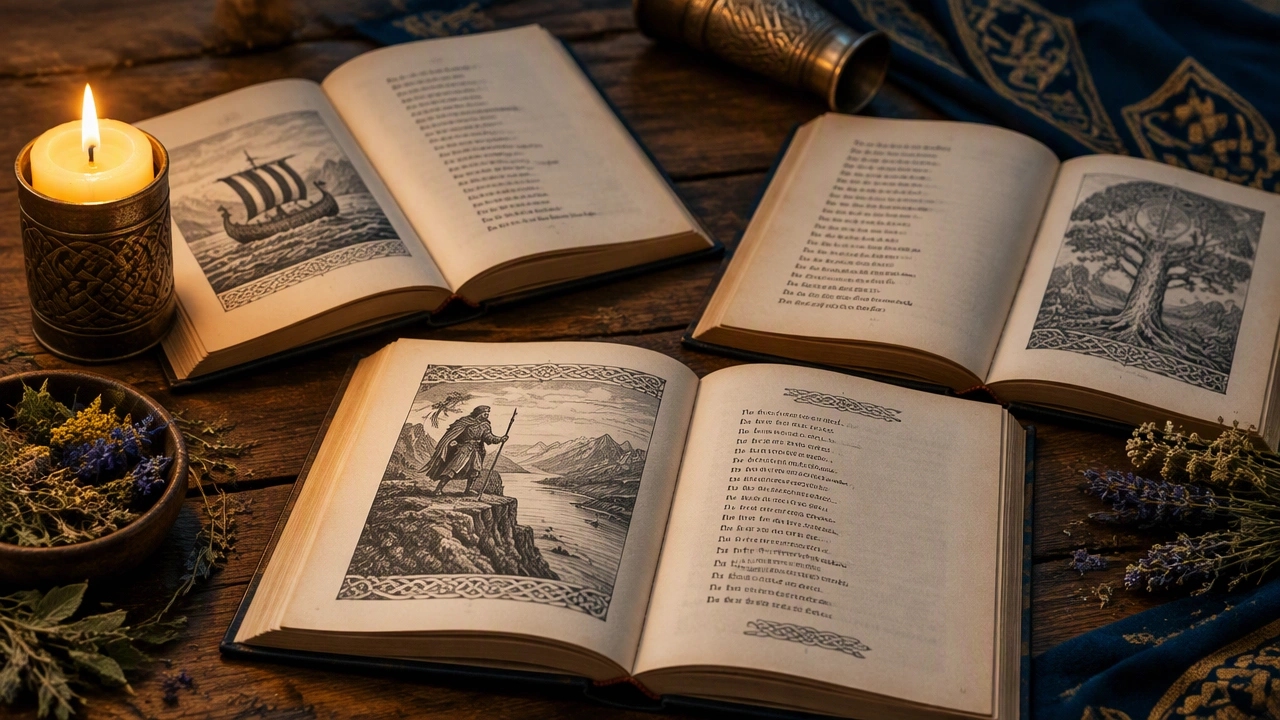
The Völuspá is one of the most frequently translated poems in the Poetic Edda, yet English versions can differ dramatically in tone, imagery, and theological implication. Some translators preserve the terse, alliterative shape of the Old Norse, while others aim for readable modern English and occasionally smooth over difficult metaphors. Comparing translations is therefore not a minor exercise: it changes how we understand the seer’s vision, the fate of the gods, and the poem’s possible ritual or literary setting. Readers are invited to choose two or three published translations and place key stanzas side by side. Pay attention to words for fate, sacrifice, cosmic boundaries, and the final renewal of the world. Which version feels most faithful to the original ambiguity? Which one makes the strongest interpretive choices? Please quote responsibly, name the translator and edition, and explain your reasoning. A careful comparison can reveal how much of our popular image of Ragnarök is shaped by translation.