Elder Futhark Runes: Origins, Meanings, and Uses in Early Northern History
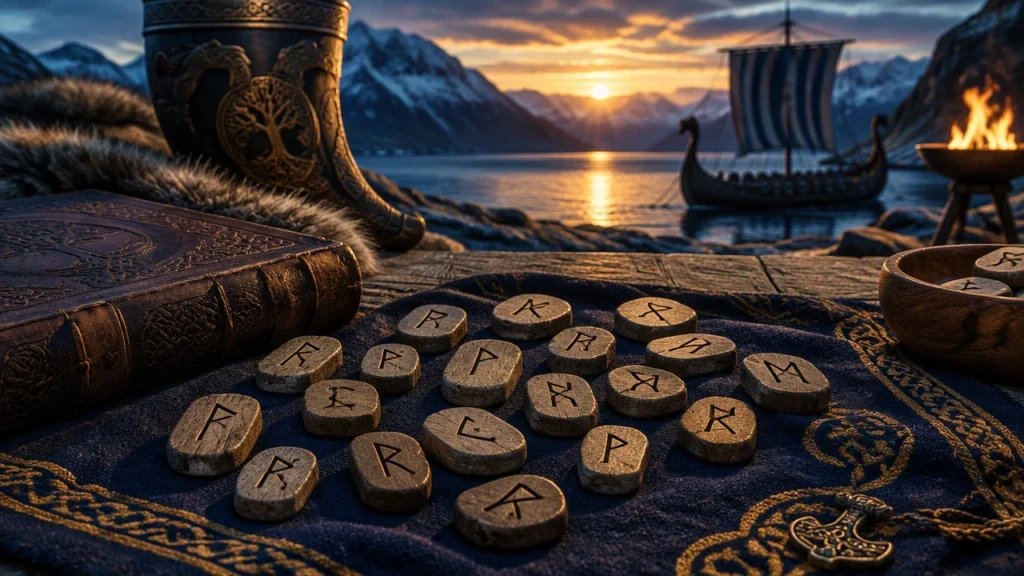
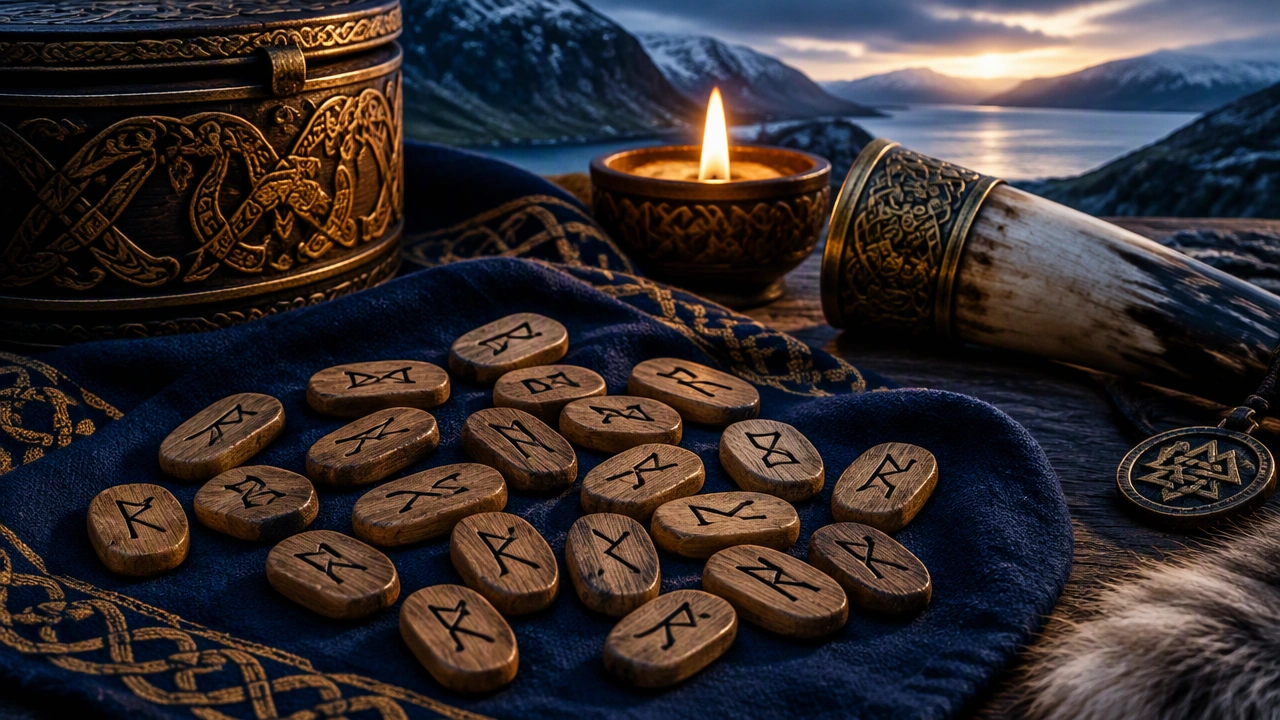
The Elder Futhark is the oldest known runic alphabet of the Germanic world, used from roughly the 2nd to the 8th centuries CE across Scandinavia and the wider North Sea and Baltic regions. Its name comes from the first six letters—f, u, þ, a, r, k—and it contains 24 characters organized into three groups of eight called aettir. In Norse mythology and early northern history, the Elder Futhark is central to understanding how people wrote, traded, commemorated the dead, and engaged with symbols believed to carry power.
Runes are not simply letters in the modern sense. Each rune has a name, a sound value, and a visual form shaped by the materials on which it was cut. Straight strokes dominate because runes were carved into wood, bone, and stone. Diagonal lines are common, while curves are rare. This practical carving logic gave runic writing its distinctive look and made the alphabet portable across regions and centuries.
Origins of the Elder Futhark
The origins of the Elder Futhark lie in early alphabets used around the Mediterranean, especially the Latin and North Italic scripts. Many scholars connect runic forms to Old Italic letter shapes known from the Alpine regions, where Germanic groups had contact withItalic writing traditions. The runic system adapted those models into a new script suited to northern languages and northern craft. Early inscriptions appear in southern Scandinavia and along trade routes that linked the Baltic with the Roman world, reflecting movement, exchange, and cultural contact in the first centuries of the Common Era.
The earliest secure runic inscriptions date to the 2nd century CE. Notable examples include the Vimose comb from Denmark, the Thorsberg chape from northern Germany, and the Kylver Stone from Sweden. These objects show that runes were already standardized in form and order across a wide area. The consistent use of the 24-character system suggests a shared scribal tradition among Germanic-speaking communities, even as local dialects varied.
The 24 runes: names, phonetics, and order
The Elder Futhark’s 24 runes can be grouped into three aettir. The first aett includes fehu (f), uruz (u), þurisaz (þ), ansuz (a), raidō (r), kaunan (k), gebo (g), and wunjō (w). The second includes hagalaz (h), nauthiz (n), īsaz (i), jēra (j), eihwaz (ï), perþō (p), algiz (z), and sōwilō (s). The third includes tiwaz (t), berkanan (b), ehwaz (e), mannaz (m), laguz (l), ingwaz (ŋ), dagaz (d), and ōþala (o).
Each rune’s name is a common word: fehu means “cattle” or “wealth,” uruz evokes the aurochs, þurisaz points to a giant or thorn, ansuz suggests a god or breath, and gebo means “gift.” These names likely helped learners remember both sound and shape. Phonetically, the Elder Futhark reflects early Germanic pronunciation. Some letters represent sounds that later changed in Old Norse and Old English, which is why the runic system was later simplified into the Younger Futhark with only 16 runes. In the Elder Futhark, each rune maps to a single sound or closely related sounds, making the script compact and efficient for short inscriptions.
Inscriptions: what they tell us
Runic inscriptions survive on everyday objects and monumental stones. Combs, brooches, spearheads, and weapon fittings often bear short texts: names, ownership marks, and phrases like “I belong to” or “made this.” These are direct, practical uses of writing in a society that valued craft and personal identity. The Kylver Stone, for example, includes a sequence of runes that may show the full Elder Futhark order, offering evidence for teaching and scribal practice.
Personal names appear frequently, showing that runes helped people mark property and memory. Some inscriptions memorialize the dead, while others may function as declarations of skill by the maker. The language is usually Proto-Norse or early Germanic dialects, and the messages are brief because carving is laborious and space is limited. Even so, these short texts give modern readers a window into naming, kinship, trade, and belief in the early northern world.
Runes and magic
In later Old Norse sources, runes are linked with ritual knowledge and power. The poem Hávamál describes Odin’s self-sacrifice to gain runic wisdom, emphasizing that runes must be “won” through ordeal and insight. The Sigrdrífumál offers counsel on different runes for victory, ale, healing, and communication. These texts are medieval, but they point to older ideas that runes were more than ordinary letters.
Archaeology adds nuance. Some inscriptions appear on amulets or objects placed in graves, and a few show unusual letter sequences or deliberate reversals that may suggest protective or ritual intent. Others are clearly mundane. It is best to see runic “magic” as a spectrum: a letter could be a sound, a symbol, and a carrier of meaning at the same time. The same alphabet could serve a maker’s signature on a comb and a short charm on a bracteate. Context determines whether an inscription is administrative, commemorative, or symbolic.
How the Elder Futhark differs from later runes
The Elder Futhark’s 24 runes were simplified in the Viking Age to the 16-rune Younger Futhark. That change reflects shifts in language and phonology, as well as new social needs in trade and communication. Anglo-Saxon scribes developed the Futhorc, expanding the system to handle sounds in Old English. These developments show that runic writing was alive and adaptive, changing with the communities that used it.
Compared to later scripts, the Elder Futhark keeps a closer balance between sound and symbol across its full set. It preserves distinctions that later systems collapsed, making it a key resource for understanding early Germanic language and thought.
Why the Elder Futhark matters
The Elder Futhark is a practical alphabet and a cultural artifact. It shows how early northern societies adopted and transformed outside ideas to fit their own needs. Its inscriptions reveal names, crafts, and beliefs. Its myths and later literary reflections reveal how people understood knowledge, power, and memory. Studying the Elder Futhark runes alphabet origins and meanings helps us trace the connections between language, material culture, and ritual in Norse mythology and early northern history.
For anyone interested in runes, the best approach is cautious and evidence-based. Read inscriptions in context, compare forms across regions, and treat magical interpretations as part of a wider cultural story rather than a single fixed meaning. In that way, the Elder Futhark remains both a script and a doorway into the early northern world.