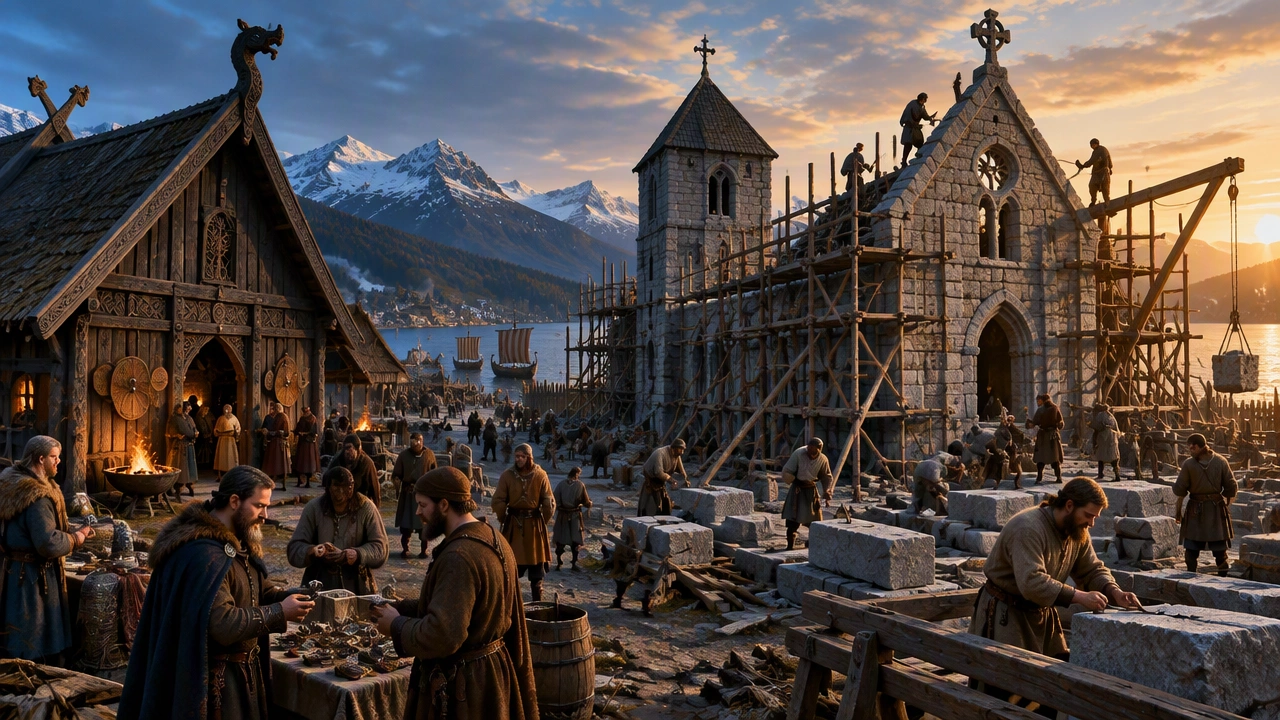
The end of the Viking Age is often tied to the Christianization of Scandinavia, but the relationship deserves careful debate. Conversion changed royal authority, legal institutions, church alliances, and the legitimacy of raiding, yet it was only one force among many. Stronger kingdoms, new trade routes, shifting military technology, demographic change, and political pressure from European powers also reshaped Nordic life. The traditional date of 1066 is useful as a marker, but it does not describe a single sudden transformation across every region. Some communities adopted Christianity while continuing older practices; others experienced conflict, compromise, and gradual change. A strong argument should define what “the end” means: the end of long-distance raiding, the end of a particular political order, or the end of a cultural identity. Please distinguish evidence from later national storytelling. Which sources show religious change, and which show political or economic change? Bring examples from runic stones, church foundations, coinage, law codes, and foreign chronicles. The most persuasive answer will probably be plural rather than singular.